Netanyahu and Eisenkot Face 61-Seat Hurdle in Israeli Knesset
Election results leave no clear majority, forcing President Herzog to select a candidate with a 28-day deadline to form a coalition.
By Lauren Mitchell ·
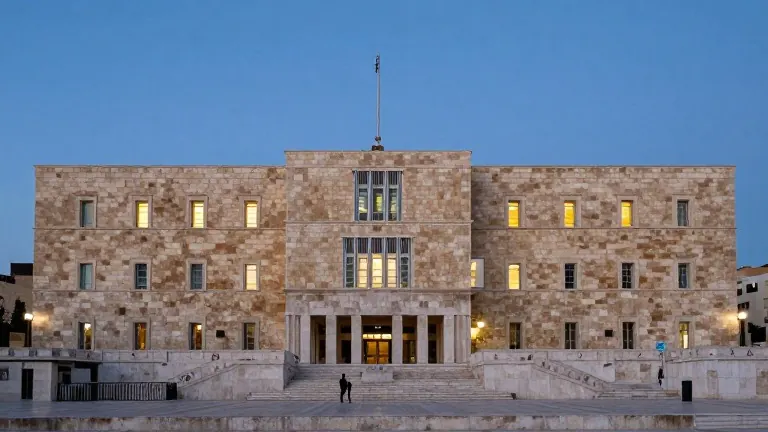
Israeli President Isaac Herzog must now select a candidate to form a government after the Knesset election produced a stalemate. Neither Prime Minister Benjamin Netanyahu nor challenger Gadi Eisenkot commands a majority. The process begins with the president consulting with party leaders to identify the candidate most likely to assemble at least 61 seats.
Eisenkot’s center-right bloc holds more seats than Netanyahu’s right-wing camp, yet he lacks the numbers to govern alone. His alliance with Arab-led parties would secure a comfortable majority of over 67 seats, but Eisenkot has repeatedly rejected this option during the campaign. He argues that these parties, which represent 21% of the population, often differ on the goals for Gaza and the status of Hamas.
Netanyahu’s Likud party won 27 seats, the most of any single party. However, his broader coalition of right-wing, far-right, and ultra-Orthodox groups totals only 53 seats. He needs eight additional lawmakers to reach the threshold, while Eisenkot would need roughly 13 defectors if he continues to exclude Arab parties from his calculations.
One potential path is a unity government between the two rivals. Israeli and U.S. media reports suggest President Trump favors this outcome, though the U.S. president has not independently confirmed the preference. Such a coalition could facilitate regional cooperation, including Gaza reconstruction and normalization talks with Saudi Arabia. Eisenkot has pledged not to serve under Netanyahu, leaving questions about who would hold the prime ministerial post.
If negotiations fail, Israel may face a fourth election in two years. President Herzog urges parties to approach talks with open minds, but Netanyahu sees a repeat vote as potentially advantageous. A new election could see lower turnout among Arab voters and liberal Israelis who traveled from abroad to vote in this cycle. The president also warned that if no government is formed, the process may end without a majority.
Legislative maneuvering is already underway as opposition figures seek power during the interim. Eisenkot’s bloc aims to replace the Knesset speaker and pass a commission of inquiry into the events preceding the October 7, 2023, attack. They also plan to reverse recent changes to judicial independence. These moves allow the opposition to exercise influence while coalition talks continue, even as tensions with Iran simmer.
Analyst Danny Citrinowicz notes that Netanyahu has a political incentive to resume fighting Iran during the government formation period. He said, "Netanyahu definitely has an incentive to go to war," arguing that an emergency would pressure Eisenkot into a unity deal. Eisenkot warned on election night that Netanyahu should not use "Israel's security for your political needs," setting the stage for a difficult negotiation process.