Libatique: AI Will Replace Marvel VFX, Not Actors
The cinematographer told Variety at Evolution Mallorca that studios will adopt the tech to cut costs, but human performance remains essential.
By Cecilia Martin ·
Three-time Oscar nominee Matthew Libatique believes artificial intelligence will replace the visual effects used in blockbuster franchises like Marvel, but it will not replace human actors. Speaking at the Evolution Mallorca film festival in Spain, where he received the Cinematography Icon Award, Libatique argued that the technology serves a specific economic function in high-budget filmmaking. He stated that while AI could replace the studio’s reliance on expensive digital environments, it would never displace the performers who anchor those films.
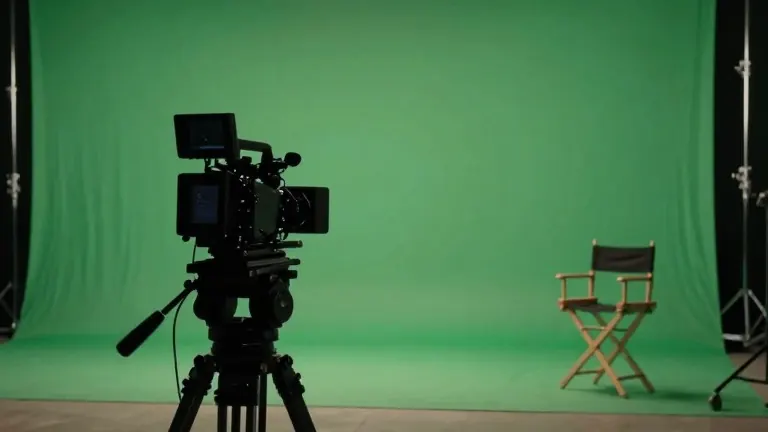
Libatique pointed to the financial structure of major franchises as the primary driver for adopting the technology. He noted that studios like Marvel and DC produce films at high costs, making it logical for them to use AI to curb expenses in visual effects. He cited Zach Snyder’s 2006 film “300” as an early example of a movie that could easily be produced with AI today. That film was shot almost entirely against green screens in a warehouse, with most landscapes constructed digitally. Libatique described it as a prototype for an AI product, noting that such films often have a limited audience based on age and social interaction.
The cinematographer emphasized that human performance remains the core of audience connection. He said studios will not create AI versions of characters like Robert Downey Jr. or Chris Evans because viewers fall in love with the specific personalities of these actors. He rejected the idea of an AI-created Black Widow or Batwoman, arguing that it is difficult to replicate the unique qualities of a human performer in a digital format. He stated, “I don’t think there’s going to be a Tilly Norwood Batwoman or Black Widow. You can’t tell me you’re going to make an AI character that can do what Robert Pattinson does. You can’t.”
Libatique is currently testing AI technology with director Darren Aronofsky ahead of their next collaboration. Aronofsky, who made “Noah” and “Black Swan,” launched the AI studio Primordial Soup last year with Google DeepMind. The two are exploring how much control the technology requires. Libatique explained that Aronofsky wants to see how little input the system needs, while Libatique believes that providing more data helps the AI achieve the desired look. They plan to use the camera in traditional ways while observing how the technology processes the footage.
The cinematographer acknowledged that AI is already impacting post-production jobs. He admitted that machine learning helps with tasks like correcting glare, which previously required sending footage to overseas facilities where workers earned low wages. He felt for the displaced experts, noting that the work had already migrated to other countries before AI arrived. He described the situation as a complex shift in how labor is distributed within the industry, asking when the technology will begin replacing people directly rather than just changing their workflow.
Libatique also addressed concerns about creative copyright and style. He recalled receiving AI-generated videos where the machine was instructed to shoot in his specific style. He found the practice offensive, arguing that his work is defined by understanding the director's vision rather than imposing a singular aesthetic. He stated that AI is too plastic to capture the nuanced differences in his collaborations with directors like Jodie Foster, Olivia Wilde, and Jon Favreau. He noted that lighting in modern films has become homogeneous, comparing many productions to a standardized visual template.
Despite his concerns, Libatique sees practical benefits in the technology. He used AI in the short film “Goodbye Lamby,” directed by Dustin Yellin, where the director created a world inside one of his sculptures. The team chose AI over stop motion animation for the project. Libatique noted that the AI prompter still needed physical lighting cues to guide the digital creation, proving that human input remains necessary. He concluded that while AI is a tool for efficiency, it has not yet produced a result that impresses him enough to replace the human element of filmmaking.
Source: Variety