
Arizona artist regains steady hands after brain implant surgery
Bill Daggett, a woodcarver diagnosed with Parkinson's disease, returned to his craft following deep brain stimulation, a procedure that uses electrical pulses to manage tremors.
By Hiroshi Sato ·
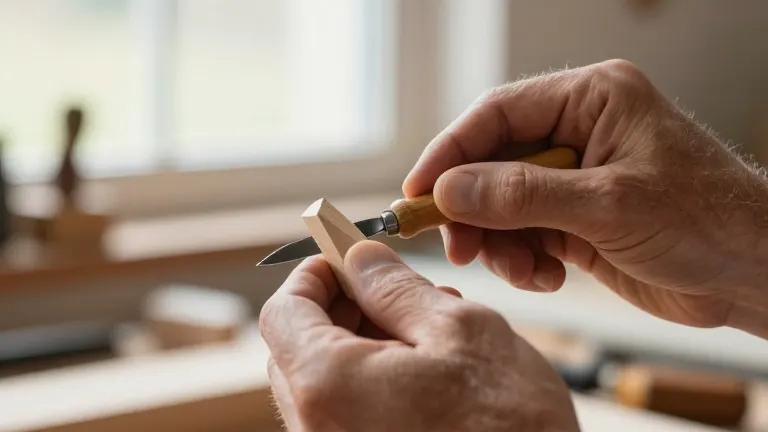
Bill Daggett can carve wood again. The Arizona artist, who spent decades perfecting the craft, underwent deep brain stimulation surgery to combat the severe tremors caused by Parkinson's disease. His hands are now steady enough to hold a tool and shape the material, a capability he lost years ago.
Daggett’s symptoms began with shaking that made daily tasks difficult. A doctor attending an art show observed the tremors and urged him to seek a medical evaluation. The subsequent diagnosis was Parkinson’s disease. The condition progressed to a point where medication alone failed to control the shaking.
The physical instability took an emotional toll. Daggett said he struggled to eat and avoided going out in public. “I couldn’t even eat, hardly. I was shaking so bad, and I didn’t want to go out anymore. That’s part of the depression. You don’t want to be seen when you can’t hold a fork and get it to your mouth,” Daggett said.
He eventually chose deep brain stimulation, a therapy that sends electrical pulses to specific areas of the brain to stop tremors. Sam Cradduck, a gerontologist and host of the show “Aging Untold,” explained the mechanism. He compared the device to a pacemaker for the heart, noting that it helps the brain reset and send out electrical pulses to reduce tremors and manage the disease's progression.
Cradduck described the procedure as a quality of life breakthrough for patients who have lived with the disease for years. He emphasized that while physical symptoms are often discussed, the emotional loss of identity is frequently overlooked. “He was so connected with being the artist and being able to create, and the disease was robbing him of that. We see that it’s robbing him of physical abilities maybe to eat, but we forget that it’s robbing him of a piece of himself,” Cradduck said.
The surgery has allowed Daggett to resume his work. The electrical pulses from the implanted device manage the symptoms that previously hindered his movement. The case illustrates the impact of the therapy on patients whose physical abilities limit their professional and personal lives.
Daggett’s recovery marks a return to the activity that defined his creative identity. The procedure is now a focal point in discussions about managing advanced stages of Parkinson’s disease, offering a method to restore function for those who have lost the ability to perform fine motor tasks.
Source: WCJB