18 committees face delays as Vermont school merger rules create legal and data gaps
Confusion over public meeting laws and missing data from the Agency of Education has stalled the initial phase of the state's regional consolidation effort.
By Cecilia Martin ·
Property owners in the Grand Isle Supervisory Union face a familiar dilemma: their district has closed two small schools on Isle La Motte and North Hero in the past six years, yet annual tax bills continue to rise due to soaring education costs. For residents like these, the upcoming changes under Act 170 represent a potential shift in how local schools are funded and managed, but the process to get there has started with friction.
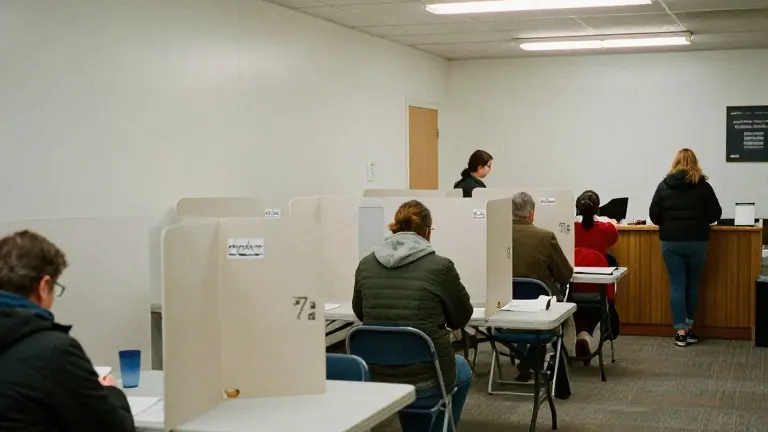
The law passed last year requires school districts to join regional merger study committees. Eighteen such groups were formed, each intended to hold its first meeting before October 15. The goal is for the state to sign off on local recommendations by the end of 2027, with towns voting on new district maps in 2028. However, the timeline is already slipping in many communities.
Richard Monterosso, chair of the South Hero School Board, entered the initial meetings with an open mind. Within a month, he reported confusion and frustration among board members across the state. The core issue for some is legal ambiguity. Because these new committees are independent entities spanning different districts, some lawyers argue that meeting agendas and minutes cannot be posted on individual supervisory union websites. This uncertainty has led some committees to cancel future meetings until the question is resolved.
David Younce, the lead facilitator for the Act 170 process, acknowledged that these obstacles are slowing the work. He is coordinating with the Legislature and the Agency of Education to move forward but noted the challenge of balancing the need for clear answers with the legal deadlines. Younce warned that he may need to return to the Legislature next year to seek an extension if the vote in 2028 is at risk.
Another point of contention is the availability of data. Brooke Olsen-Farrell, president of the Vermont Superintendent Association, said committees are being asked to make decisions about aging buildings and tax impacts without accurate, timely reports from the state. "Right now we’re at a place where there are far more questions than answers," she said. She added that the rollout is not inspiring much trust in the field.
Education Secretary Zoie Saunders pushed back on the idea that a lack of guidance is the primary cause of delays. She stated that the agency is producing the necessary reports and that there are no unresolved questions waiting for a response. Saunders suggested that some stakeholders simply do not like the answers being provided. She emphasized that the voluntary merger process was a compromise between the administration and the Legislature, designed to avoid forcing specific consolidation maps on communities.
Smaller districts, particularly those on the Champlain Islands, fear losing influence. Monterosso said that if his district merges with larger mainland districts like Milton or Colchester, island interests would remain in the minority. "We would lose a real, meaningful voice in any decision about education on the islands," he said. The committees must now determine how individual districts will be represented on new boards, a task that has already generated distrust among smaller communities working with larger neighbors.
Source: WOXR