Why candidates keep running in congressional races they are likely to lose
Lisa Kinney and George Austin are fighting long shots in Wyoming and Connecticut, highlighting a trend of partisan entrenchment in American politics.
By Hiroshi Sato ·
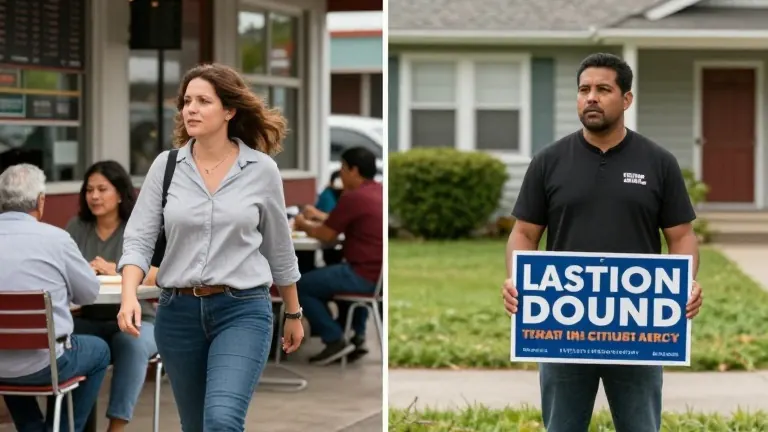
Eighty percent of House races are rated solid for one party, leaving candidates in the minority to fight with limited resources and scarce staff.
Lisa Kinney, a former state senator, is running as a Democrat for the single House seat in Wyoming. The state has sent only Republicans to Congress since the late 1970s. Kinney says she wants to offer a moderate perspective to voters who often hear only one side of the argument. Her opponent, however, has run advertisements pairing her with progressive figures like Bernie Sanders and New York City Mayor Zohran Mamdani. Kinney finds the comparison amusing. She argues that her position allows her to communicate with both Republicans and Democrats, a skill she believes is necessary to make a difference in the current Congress.
Kinney’s campaign lacks a traditional office and relies on a small group of volunteers. She spends countless hours on the road to connect with voters and discuss issues such as public lands and health care costs. Her husband, Rodney Lang, notes that even a loss strengthens the party’s infrastructure. Kinney acknowledges the difficulty of the task but maintains that she believes she can win.
George Austin faces a similar challenge from the opposite side of the political spectrum. A home builder and former football coach, he is running as a Republican in Connecticut’s second congressional district. This seat has been held by a Democrat for two decades. Connecticut Democrats have won 45 straight U.S. House elections since 2008. Austin says he wants to restore balance and encourage other working people to enter politics. He has contributed a quarter of a million dollars of his own money to the race. He also serves as his own scheduler and volunteer coordinator.
Experts point to deep partisan entrenchment as a driver of these lopsided races. Eric Ostermeier, founder of Smart Politics, notes that 19 state delegations currently consist entirely of one party. He says this is the highest number in nearly three quarters of a century. Factors include gerrymandering, geographic sorting of voters, and the difficulty for state candidates to separate themselves from the national party brand. Austin says he often stops discussing policy once voters learn he is a Republican or mention President Trump. He tries to focus on common ground issues like term limits and congressional gridlock.
Austin believes running is important even when the odds are against him. He says he wants to be a catalyst for other potential candidates. He warns that these races require a deep commitment and are not for everyone. Kinney and Austin both agree that the effort is worthwhile regardless of the final vote count.
Source: KNKX Public Radio