Lewiston voters face tight syringe cap amid debate over needle waste
Question 1 would limit sterile syringe distribution to a strict one-for-one exchange with a daily cap of 20, a move health advocates argue contradicts state data and national guidelines.
By Ruben Morales ·
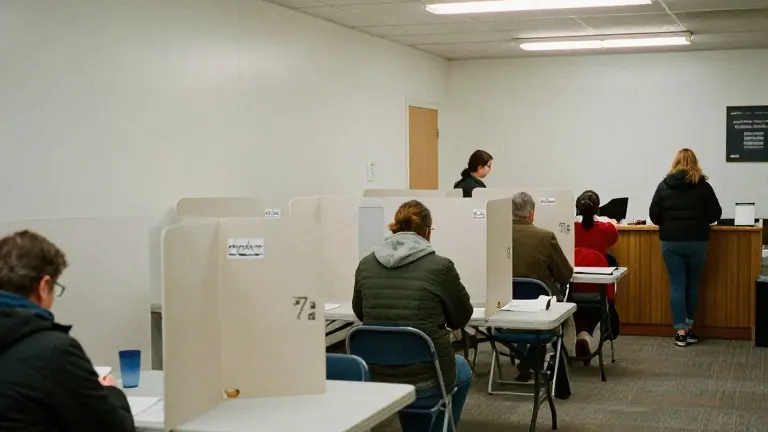
Lewiston residents will vote on Tuesday to decide whether to tighten rules for syringe service programs in the city. Question 1 on the ballot proposes a strict one-to-one exchange ratio, requiring clients to return one used syringe to receive a new one. The measure also imposes a daily limit of 20 sterile syringes per person. If approved, the city would move away from the current state standard, which allows programs to distribute up to 100 syringes to clients who do not have used ones to return.
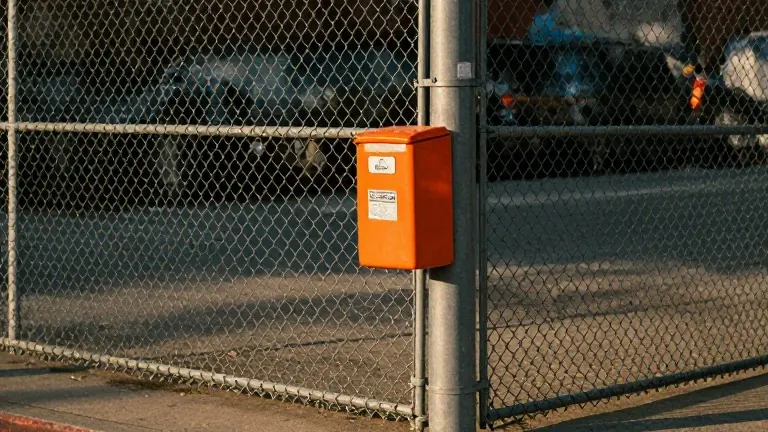
Eryn Soule, a former city councilor and current state Senate candidate, spearheaded the effort to place the question before voters. She cited growing complaints from residents about discarded needles in public spaces, particularly along the Androscoggin River. During a recent site visit to a former industrial site, Soule pointed out several syringes near a chain-link fence. She argued that current programs solve one public health issue while creating another environmental problem. "Helping one group but destroying your community is not success," Soule said. She added that under the proposed rules, clients would no longer leave with 100 syringes and would be required to bring back dirty ones.
The proposal has drawn sharp criticism from Safe and Healthy Maine, a coalition of doctors, service providers, and advocates. Cara Courchesne, the coalition's spokesperson, said the restrictions do not align with how addiction works. She noted that the proposed cap is out of step with recommendations from the U.S. Centers for Disease Control and Prevention and the World Health Organization, which support a needs-based model without strict limits. Courchesne argued that Maine's current one-to-100 cap is already conservative compared to those national guidelines.
Courchesne also pointed to recent state data to counter the argument that programs generate waste. She said the Spurwink program in Lewiston collected nearly 50,000 more syringes than it distributed over the past year. According to the coalition, these programs serve as a bridge to treatment, helping connect people with substance use disorder to recovery services. "When we are talking about restricting programs that actually get people into recovery so they are not leaving the syringe on the ground, we should be protecting those programs and not restricting them," Courchesne said.
The conflict between restriction and access is already playing out in Sanford, Maine. Two years ago, the Sanford City Council enacted a strict one-to-one exchange requirement. Last year, Maine Access Points, the local provider, paused its syringe distribution to test the impact on needle waste. Anna McConnell, the program's executive director, said the pause did not reduce litter. "There's continued to be syringe litter in the city of Sanford, so much so that there's been frustrated community conversations this summer and fall about just how many syringes are still in cities in Sanford's public parks and public trails," McConnell said.
Sanford City Manager Steven Buck disagrees with McConnell's assessment. He stated that city workers now collect only a handful of syringes per week, down from filling a five-gallon bucket previously. Buck attributed the remaining waste largely to former homeless encampments. "It is day and night," Buck said. "It's irrefutable that our volumes are down so significantly." Despite their disagreement on waste levels, both Buck and McConnell agree that referrals for support and treatment have declined in Sanford since the program changes.
McConnell said the reduction in program access has led to more people sharing and reusing syringes, resulting in serious infections. She expressed hope that voters in Lewiston would recognize the experience in Sanford as a cautionary example. Courchesne suggested alternative methods for Lewiston to address needle waste without dismantling service programs. These options include installing more public sharp disposal containers, supporting community cleanup efforts led by service providers, and using opioid settlement funds to adopt a syringe redemption program similar to one piloted in Portland. "And so there are ways that we can get our community members to safely dispose of syringes, if we are providing the tools to do so," Courchesne said.
Voters in Lewiston will cast their ballots on Tuesday to determine the future of the city's syringe service regulations. The outcome will set a precedent for how the city manages the balance between public health distribution and environmental cleanliness.