Elvis Costello's 1978 album defined a new kind of rock star
The record transformed Declan MacManus into a cultural figure by blending punk urgency with literary precision.
By Lauren Mitchell ·
Elvis Costello transformed from a pub-rock musician into a leading figure of the late 1970s British rock scene with the release of This Year's Model in 1978. The album marked the definitive shift from his debut, My Aim Is True, which had established him as a talent but left him musically unsatisfied. He sought a sound with more tension and impact, moving away from the spacious arrangements of his previous band, Clover.
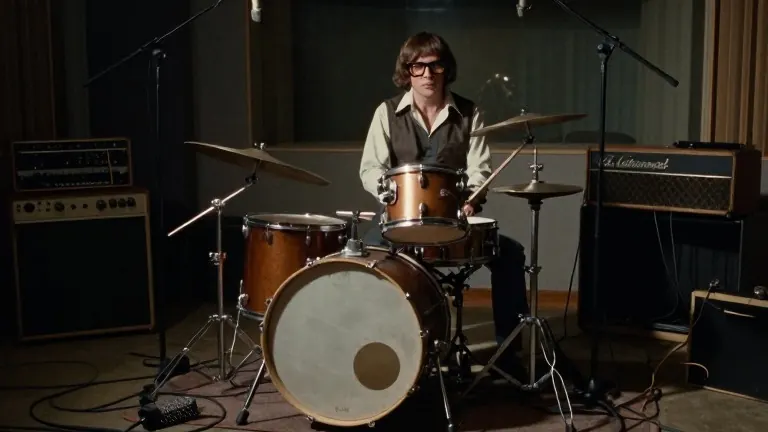
To achieve this, Costello assembled the Attractions, featuring Steve Nieve on keyboards, Bruce Thomas on bass, and Pete Thomas on drums. Nick Lowe, who produced the debut, returned to the controls. The group recorded quickly in London, capturing a nervous energy that sounded precise and startling. This approach distinguished the record from other 1977 and 1978 releases by Television, Patti Smith, and Talking Heads, which also pushed boundaries in punk and art rock.
Costello's musical education came from a wide range of influences. He cited Bob Dylan for conversational lyrics, Joni Mitchell for ambiguity, and Van Morrison for soul. The Beatles and his father, Ross MacManus, taught him melody and versatility. The Clash introduced him to ska and reggae. His father’s ability to move between styles without belonging to any one group served as a model for Costello’s own genre-hopping career.
The songs on the album reflect a central anxiety about modern life. 'No Action' turns romantic frustration into a compulsive loop, while 'This Year's Girl' examines how society consumes and discards women as products. Steve Nieve’s Vox Continental organ provides restless propulsion on these tracks. 'Pump It Up' treats desire as a commodity, and 'Little Triggers' reveals the damage in small relationship gestures. The title track expands the critique to the media machinery that shapes public taste.
The album cover, designed by Barney Bubbles and photographed by Chris Gabrin, reinforces this theme. It places Costello behind a camera, making him both the observer and the subject. This visual choice mirrors the lyrical content, where the artist is both the new thing and someone terrified of becoming obsolete. Punk was already being packaged by the music industry, and Costello wrote about the dangers of becoming a product.
The legacy of This Year's Model can be seen in artists who followed. Crowded House carried forward his knack for pop songs that become stranger on closer listen. Billy Bragg turned the literate songwriter into a punk-era vocation. Radiohead inherited the suspicion that beautiful music could conceal unease. They Might Be Giants pushed intelligence and absurdity into new corners. Liz Phair brought melodic directness and sexual candor to indie rock.
For many listeners, the album remains a source of articulation for modern anxieties. The song 'Radio Radio' in particular resonates with audiences who feel the media landscape is controlled by algorithms and sales pitches. Costello’s performance on the track, characterized by twitchy energy and furious delivery, captures the feeling of being trapped in a culture that constantly reminds individuals they can be replaced.
The record does not offer reassurance. It provides velocity, wit, and a refusal to stop looking back at the camera. Nearly fifty years later, the models change faster and the cameras multiply. The anxiety remains, and the record continues to ask who is doing the looking.
Source: SaportaReport