Easter Island population drops to 111 after Peruvian raids
The collapse of the Birdman cult and the arrival of smallpox reduced Rapa Nui's residents to a fraction of their former numbers by the late 19th century.
By Cecilia Martin ·
Rapa Nui, the Chilean island known for its massive stone moai, experienced a demographic collapse that left only 111 inhabitants by 1877. This sharp decline followed a period of tribal conflict and the arrival of Peruvian slave ships, which captured roughly 1,500 men. These captives represented nearly half of the island's population at the time.
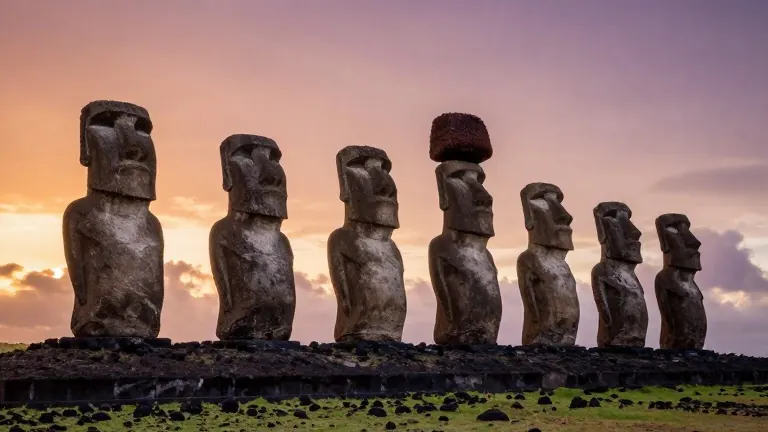
The island, located 2,300 miles from Chile's mainland, was annexed by Chile in 1888. Before the population crash, Rapa Nui was home to a complex society that carved nearly 1,000 moai statues between A.D. 1000 and the 1650s. The statues were made from compressed volcanic ash, with later commissions reaching heights of 33 feet and weighing over 180,000 pounds. These large figures served as representations of chieftains and elites, with their size indicating the status of the individual they honored.
Tribal warfare intensified around the 17th century as natural resources depleted. Factions turned rivals' statues face down into the ground, a act considered the highest form of disrespect. Eyes were dug out of the moai to shatter their spiritual power. According to local folklore, a brutal battle occurred between the upper-class Long Ears and the underclass Short Ears. The Long Ears lit a ditch on fire to kill their rivals, but the Short Ears countered by throwing the Long Ears into the flames, killing most of the clan.
In the aftermath of these conflicts, the island adopted the Birdman cult to establish a new leader. For approximately 186 years, athletic proxies competed in an annual race. Contestants had to descend a 1,000-foot cliff, swim a mile to an islet, retrieve a sooty tern's egg, and return without breaking it. The winner's chief was crowned the Birdman, a role that required the holder to live in isolation for a year without bathing or cutting fingernails. The cult collapsed when Peruvian ships captured many of the island's men for forced labor.
The few survivors who returned from Peru brought smallpox to the island, further reducing the population. Today, tourism on the 63-square-mile island is strictly regulated. Visitors must use licensed guides to access most sites. Local guides like Otea, a traditional tattoo artist and dancer, explain that the history remains a subject of ongoing inquiry. "The more I read and learn about our history, the more questions I have," Otea said.
The moai were transported from the Rano Raraku quarry to their final platforms using methods that remain debated. Theories include dragging the statues on sleds with up to 180 people or rocking them upright to make them appear to walk. Most statues face inland to watch over villages, with 13-ton red hats known as pukao placed on their heads. These hats symbolized the topknots of the elite class. The red color came from dirt used to paint the hair of the superior class.
Modern infrastructure on the island reflects its isolation. Mataveri International Airport serves as the main entry point, where visitors often see feral chickens in the departure area. The island has no chain stores, making imported goods like pastries from Santiago highly sought after. The Nayara Hangaroa lodge, one of the two main accommodations, features circular buildings with grass roofs designed to mimic the ceremonial structures of the Birdman era.
Source: The News-Herald