Culinary History: Joe Ranji Smile's Failed Restaurant Venture
A chef with a flair for theater opened an exclusive Indian eatery on Fifth Avenue in 1901, but the establishment closed within a year due to shifting public tastes and legal troubles.
By Ruben Morales ·
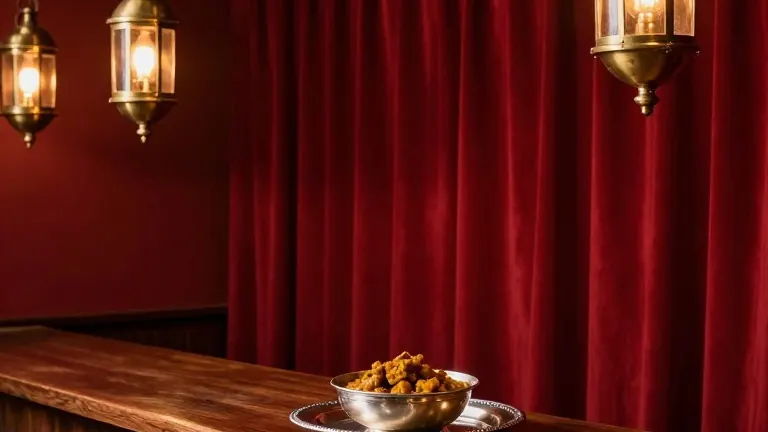
Joe Ranji Smile opened Omar Khayyam at 325 Fifth Avenue in late 1901, establishing what was likely the first restaurant in the United States dedicated exclusively to Indian cuisine. The venue occupied prime real estate just one block from the original Waldorf-Astoria Hotel, where the Empire State Building would later rise. Smile decorated the space with Indian draperies and hanging lanterns to create an immersive atmosphere for diners.
Smile had previously gained fame as a curry cook at Sherry's Restaurant, a high-end establishment on Fifth Avenue that catered to wealthy New Yorkers. His arrival in the United States in 1899 was prompted by an invitation from Louis Sherry, who recognized his skills after Smile worked in London at the Cecil and Savoy hotels. At Sherry's, Smile performed as a showman, wearing a satin coat and blue silk turban while asking customers if they preferred their curry hot or mild. Newspaper headlines from that era noted that New York women were particularly captivated by his persona.
To fund his independent venture, Smile secured financial backing from Roland R Conklin, a financier and inventor of an early motorhome. The New York Herald reported that the restaurant employed a staff of Indian waiters wearing voluminous turbans, along with a group of musicians. Despite this elaborate staging, the restaurant struggled to maintain a steady customer base. Within one year, Omar Khayyam had closed its doors.
The New York Sun attributed the closure to public fatigue with Indian food, dismissing it as a passing fad. Meanwhile, Smile began to complicate his public narrative by claiming he was the son of the emir of Baluchistan. He made a trip to Bombay before opening the restaurant, recruiting staff including valets, a dancing girl, and elephant drivers for his upcoming event in London. A subsequent federal case alleged that Smile illegally trafficked these individuals into the United States to work at his restaurant.
Smile evaded deportation, though many in his entourage were not as fortunate. He continued to refine his persona, marrying a series of young American women while claiming that Indian food acted as a secret elixir for female beauty. He toured the country performing cooking demonstrations, sometimes accompanied by jugglers and dancers. In Washington, D.C., he served a dessert called bungalow while entertaining crowds. In Chicago, he rebranded himself as the brother of the great Beglerberg of Baluchistan.
Legal issues eventually forced Smile to retreat from public view. Charges included the forcible confinement of a dancing girl and a refusal to pay a bill at an Italian restaurant in Manhattan. By the 1920s, he listed his occupation as a merchant and largely abandoned cooking. The final recorded evidence of his life dates to 1937, when his fourth or fifth wife filed for an annulment in New York Supreme Court. By that time, Smile had disappeared from public record.
Despite the short lifespan of Omar Khayyam, the restaurant helped introduce Indian cuisine to a wider American audience. In 1909, journalist Saint Nihal Singh published Indian recipes in the Chicago Daily Tribune, suggesting local substitutes for hard-to-find ingredients. Later, KY Kira, a Ceylonese immigrant, opened the Ceylon India Inn in Harlem in 1913. That establishment became a long-term success, operating until the late 1980s and attracting Broadway and Hollywood stars.
Source: BBC News