Aviation safety: Crash data reveals risks near runways
Federal records show aircraft collisions frequently injure people on the ground in residential and industrial zones.
By Hiroshi Sato ·
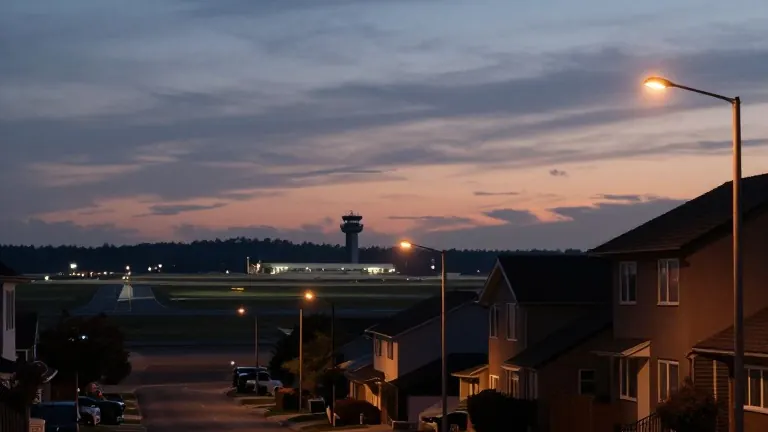
The sky above a neighborhood street can be a quiet threat.
Last year, a UPS aircraft crashed seconds after takeoff in Louisville, Kentucky. The accident killed three crew members and twelve people working in an industrial area near the runway. This event has drawn attention to the millions of Americans who live or work in what experts call danger zones. These are areas located close to airports where the risk of ground casualties is higher.
The Federal Aviation Administration sets minimum buffers to reduce the impact of aviation disasters. However, industry experts argue that these standards do not go far enough to protect homes and businesses. A national investigative team reviewed federal crash data to map where these accidents occur. The analysis identified instances across the country where planes struck homes and neighborhood streets. In many of these cases, people on the ground were injured or killed alongside the flight crew.
Joce Sterman, a senior national investigative reporter, interviewed advocates pushing for industry-wide changes. Among them was a Florida mayor whose city has experienced a series of crashes in close proximity to the airport. Sterman also spoke with the mother of a four-year-old boy. Her son died when a plane struck the family's car just feet from the airport boundary.
A retired airline pilot and safety advocate weighed in on potential solutions. He discussed measures that could be taken on both sides of the runway fence. The goal is to reduce the likelihood of collisions and mitigate damage when they happen.
Separately, a new federal report identifies carbon monoxide from backup generators as a hidden danger during power outages. Investigators studied poisonings in southeast Louisiana for four years. They are now recommending a major change in how close generators can be placed to homes.
In rural communities, a new method is being tested to speed up medical emergency response. A one-person aircraft can carry a paramedic and life-saving equipment directly to a patient, bypassing road travel. Meanwhile, consumer experts are advising on strategies to manage credit card debt while interest rates remain high.
Source: WCJB