
Prop 45 Sets 365-Day Limit on Environmental Reviews for Essential Projects
The measure would streamline CEQA processes for housing and infrastructure, but pro-housing groups in Orange County and across California are divided over the implications for urban sprawl.
By Cecilia Martin ·
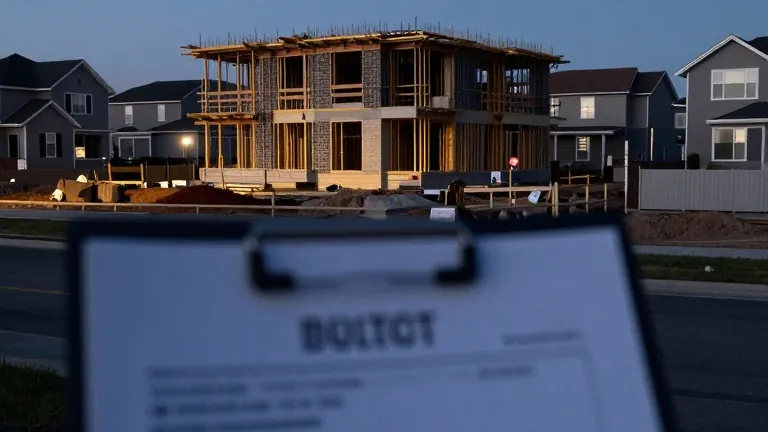
Proposition 45 would impose a strict 365-business-day deadline for completing environmental reviews of projects classified as essential, including housing, roads, and clean energy facilities. If voters approve the measure in November, the California Environmental Quality Act will undergo its most significant structural change in decades. The proposal also limits the timeframe for related litigation to 270 business days and makes such lawsuits more difficult to sustain in court.
The measure has sparked a sharp division within the pro-housing community. Assemblymember Buffy Wicks, a Democrat from Oakland and a leading advocate for housing development, supports the proposition. She describes herself as an 'all of the above' person regarding housing types. In contrast, Eastbay for Everyone and the Greenbelt Alliance, two prominent Bay Area groups, are campaigning against it. Major advocacy organizations such as Abundant Housing Los Angeles, SPUR, and California YIMBY have taken neutral positions, leaving the middle of the movement uncommitted.
Ali Sapirman, advocacy manager at the Housing Action Coalition, noted that the housing community has been fractured. He described the current campaign as unusual. The primary point of contention is not whether more homes should be built, but where they should be located. Critics argue that the measure prioritizes low-density development at the edges of metropolitan areas over dense urban infill.
Max Dubler of California YIMBY expressed concern in the group's non-endorsement statement about facilitating car-dependent sprawl. He warned that making it easier to build at the metro fringe requires additional freeways and water infrastructure. Jordan Grimes, legislative director of the Greenbelt Alliance, called the measure a return to the sprawl era. She described it as a doubling down on land-use patterns that have failed for 75 years.
The debate centers on the effectiveness of previous streamlining efforts. In July 2025, the governor signed Assembly Bill 130, authored by Wicks, which exempted most infill housing from CEQA. According to the Office of Land Use and Climate Innovation, developers have used this exemption to entitle 17,913 units of housing since the law took effect. Grimes argues that because AB 130 addressed urban barriers, CEQA is no longer a major obstacle to residential construction.
Supporters counter that AB 130 does not cover projects larger than 20 acres, leaving large urban redevelopment sites subject to the old, slower process. Linda Mandolini of Eden Housing, an affordable housing developer, highlighted the cost of delays. She pointed to a 130-unit project in Livermore that has been stalled since 2018. A lawsuit by local residents lasted two years despite courts ruling the arguments had little merit. Mandolini said that every year lost in litigation represents real money and delayed housing for families.
The Yes on 45 campaign touts support from affordable housing developers, citing affordability as the measure's primary goal. Environmental justice groups oppose the proposition because they reject the premise that CEQA needs fixing. They argue the law prevents agencies from rubber-stamping projects without proper review. The No on 45 campaign aims to convince voters that recent legislative changes have already solved the housing approval problem.
Mahdi Manji of the Inner City Law Center in Los Angeles supports the measure despite the urbanist concerns. He noted that the group is not strictly an urbanist organization. He said that making housing more affordable in distant areas like Lancaster and Palmdale is beneficial because many of his clients live in those communities. The proposition will decide whether the state favors speed and scale or density and environmental scrutiny in its housing policy.
Source: LAist · original report published
More Politics · Long Beach news · Report a business · Got a Story?