
Lebanese reporter dies as Israeli strike traps colleague in rubble
Zeinab Faraj was pulled from the wreckage of al-Tiri an hour before the confirmed death of veteran journalist Amal Khalil.
By Cecilia Martin ·
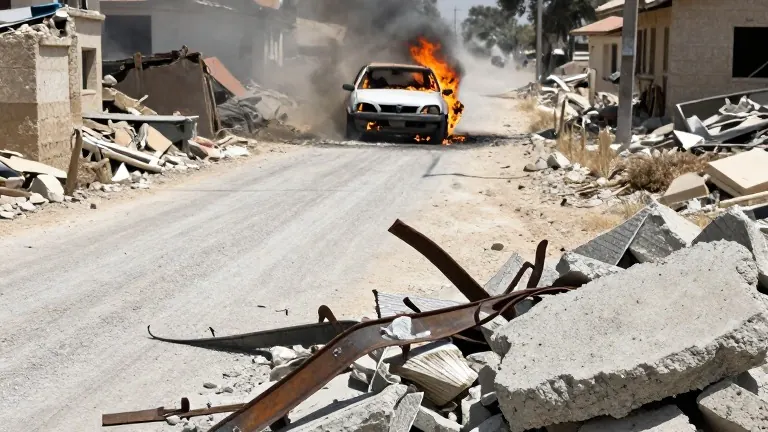
Twenty-one-year-old photojournalist Zeinab Faraj was trapped beneath rubble for an extended period before paramedics freed her on 22 April. Her colleague, Amal Khalil, a 42-year-old newspaper reporter, died in the same strike. The attack occurred in the village of al-Tiri in southern Lebanon, a day after Israel agreed to a ceasefire following a month of deadly airstrikes.
The two women had traveled together to document the aftermath of the war. They were joined in their vehicle convoy by Ali Nabil Bazzi, a 27-year-old municipal official, and Mohammed Hourani, 37, a friend of the mayor. Bazzi had planned to sign a marriage contract that evening but joined the trip after meeting the group at Tebnine governmental hospital. The car ahead of the journalists was struck by the first missile, killing Bazzi and Hourani.
Faraj described the immediate aftermath in a first-person account. She said she did not hear the missile but heard Khalil screaming. The car in front caught fire. Faraj approached the wreckage to check on Bazzi. Khalil repeated, “Oh God, they’re gone.” Faraj saw the bodies torn apart. Drones then appeared, flying low and close. Faraj said the drones assured them help was on its way, a promise she described as “like an anaesthetic.”
As they attempted to return to their vehicle, a second missile struck the car. Both women were thrown backward. Khalil wrapped her arms around Faraj. They took shelter in a nearby house. Faraj sent a final text message to her sister before her phone battery died: “There’s no hope left. Forgive me.” A drone descended toward Faraj while she was inside the bathroom. She later recalled thinking her heart stopped.
A paramedic reached the scene and held Faraj by the shoulders while a second paramedic cleared the rubble. Faraj told him, “Don’t leave me. I’m afraid to stay alone.” The paramedics pulled Faraj free as drones returned. She heard a stun grenade dropped by a drone. In the ambulance, she repeatedly mistook the vehicle's sound for a drone. She asked hospital staff about Khalil. The nurses’ silence confirmed Khalil’s death. Khalil is believed to have died about an hour before the paramedics returned to the area.
The Israeli military justified the attack by stating they identified saboteurs violating the ceasefire. Human rights groups called the incident a war crime. The Israeli military received repeated messages urging them to allow a rescue operation while the two women took shelter. A week before the strike, an Israeli military spokesperson shared a video of Khalil from her newspaper and described it as “terrorist media.” Khalil had also received death threats from Israeli numbers.
Faraj is preparing to return to university. She has visible injuries to her hand and face. An injury to her face has affected the movement of one eyebrow. She still struggles to walk properly and has a limp. She wakes at night screaming and buries herself in pillows. The sound of drones puts her on edge. She says she is haunted by the image of Hourani lying on the ground after the first missile. “His head was turned towards me. His eyes open and looking at me. That is something I will never get out of my head.”
Source: The Guardian